
Chrome Tab Messaging: Service Workers and Content Scripts
A content script can read an allowed page, while an extension service worker can use chrome.tabs. Messaging is the bridge between them. The bridge needs a clear request shape, a known destination and a failure path when the page or worker changes.

Choose the direction of the message
Use chrome.runtime.sendMessage() for a one-time request to another extension context, such as from a content script to the service worker. Use chrome.tabs.sendMessage(tabId, message) when the extension wants to reach a content script in a particular tab. runtime.sendMessage does not deliver an extension message to content scripts by tab ID.
For longer-lived exchanges, Chrome also offers connect() and onConnect. Start with one-time messages unless the feature truly needs a continuing stream. A project tab capture usually needs a bounded request and one result, not an always-open connection.
Define a small message contract
Send a JSON-serializable object with an explicit type, a request ID and only the data needed. For example, a request could ask a content script for the page's selected text; the reply should identify success, the extracted value and a structured error when nothing is selected.
Validate incoming type and fields before acting. Do not treat a URL or command from page-derived data as permission to close a tab, navigate a window or write to a user's note. Those actions need their own trusted UI and authorization boundary.
Expect missing receivers and navigations
tabs.sendMessage can fail if the content script is not present in the target tab or the tab navigates before the reply. Catch the rejected Promise and tell the user which page could not be read. Avoid reporting a partial response as a successful full capture.
A tab can contain multiple frames. When a feature needs one document or frame, use the targeting options supported by the API rather than assuming every content script listener refers to the top page.
Respect the service-worker lifecycle
A Manifest V3 service worker can shut down after inactivity and wake for an event. Keep listeners registered at top level and persist important state outside global variables. A pending UI should be able to time out or retry without duplicating a saved note.
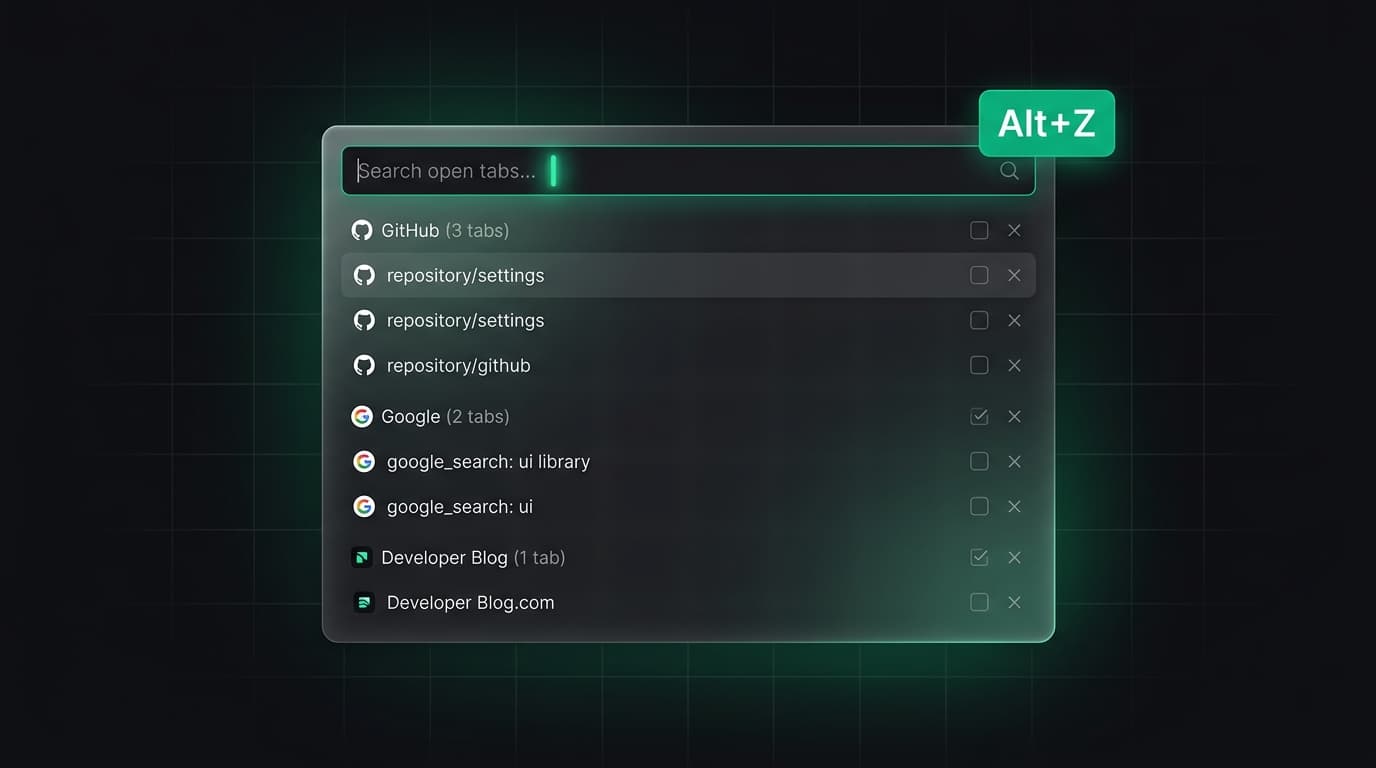
Use request IDs to correlate responses and suppress stale results after the user selects a different tab. This matters in a tab picker where several pages may be inspected in quick succession.
Idea: a source preview that asks, not assumes
Build a source preview that requests the page title and one selected excerpt only after the person clicks Capture. Show the exact excerpt before adding it to a note, and keep the URL as a separate source reference.
If extraction is unavailable, let the user save the link and write the note manually. A resilient research workflow should not force invasive page access just to keep a useful source URL.
Test the message boundary
Test with the content script present, absent, in a page that navigates, and in multiple frames. Send malformed messages in a development profile to verify the listener rejects them without taking an action.
Watch for a reply arriving after the user closes the popup or changes selection. The result should be discarded rather than silently attached to the wrong project.
Tabzero: Browser Tab Manager & Notes
Save tab links, keep notes beside your sources, and return to what matters. Tabzero is in development preview; AI Notes remains planned.
Related guides
Chrome Scripting API: Read a Page Only When Needed
Use chrome.scripting.executeScript with activeTab or host access, understand injection limits, and build a reviewable page-capture flow.
Chrome Storage API for Tab Sessions: local, sync, and session
Choose the right chrome.storage area for tab notes, settings, and temporary state while respecting quotas and recovery limits.
Chrome Sessions API: Recently Closed Tabs and Restore Limits
Understand chrome.sessions.getRecentlyClosed, restore, session IDs, and the difference between browser recovery and a saved project.