
Chrome Tabs API Permissions: tabs, activeTab, and Host Access
The name of the tabs permission causes a common mistake: an extension can use much of chrome.tabs without declaring it. The permission matters mainly when an extension needs sensitive page metadata. Choose the smallest grant that matches the feature.

Start with the operation, not the permission name
Chrome documents tab creation, reload and navigation as examples of Tabs API actions that generally do not require the tabs permission. The tabs permission instead exposes sensitive fields on tabs.Tab: url, pendingUrl, title and favIconUrl. A feature that only opens a help page should not request the ability to inspect every tab title.
Write down every data field the feature reads and every browser action it takes. Then map those needs to the permission model. The namespace chrome.tabs is available in extension pages and the service worker, while content scripts cannot call it directly. A content script must send a message to an extension context when it needs such an action.
Understand the three access paths
The tabs permission gives broad access to those four tab metadata fields. A matching host permission gives access to the same fields for matching pages and enables page-specific capabilities such as script injection. activeTab gives temporary host access for the current tab after a user invokes the extension; it does not create a standing right to inspect every site.
For a button that captures only the page the person is viewing, activeTab may fit. For an organizer that lists titles across every open tab, the broader tabs grant may be necessary. For a site-specific helper, a narrow host pattern can be more appropriate than access to all hosts.
Design a user-triggered permission request
An optional capability can be declared in optional_permissions or optional_host_permissions and requested when the person turns that capability on. Chrome requires permissions.request() to run from a user gesture such as a button click. Explain the feature before showing the browser prompt, and handle a false result without breaking the rest of the extension.
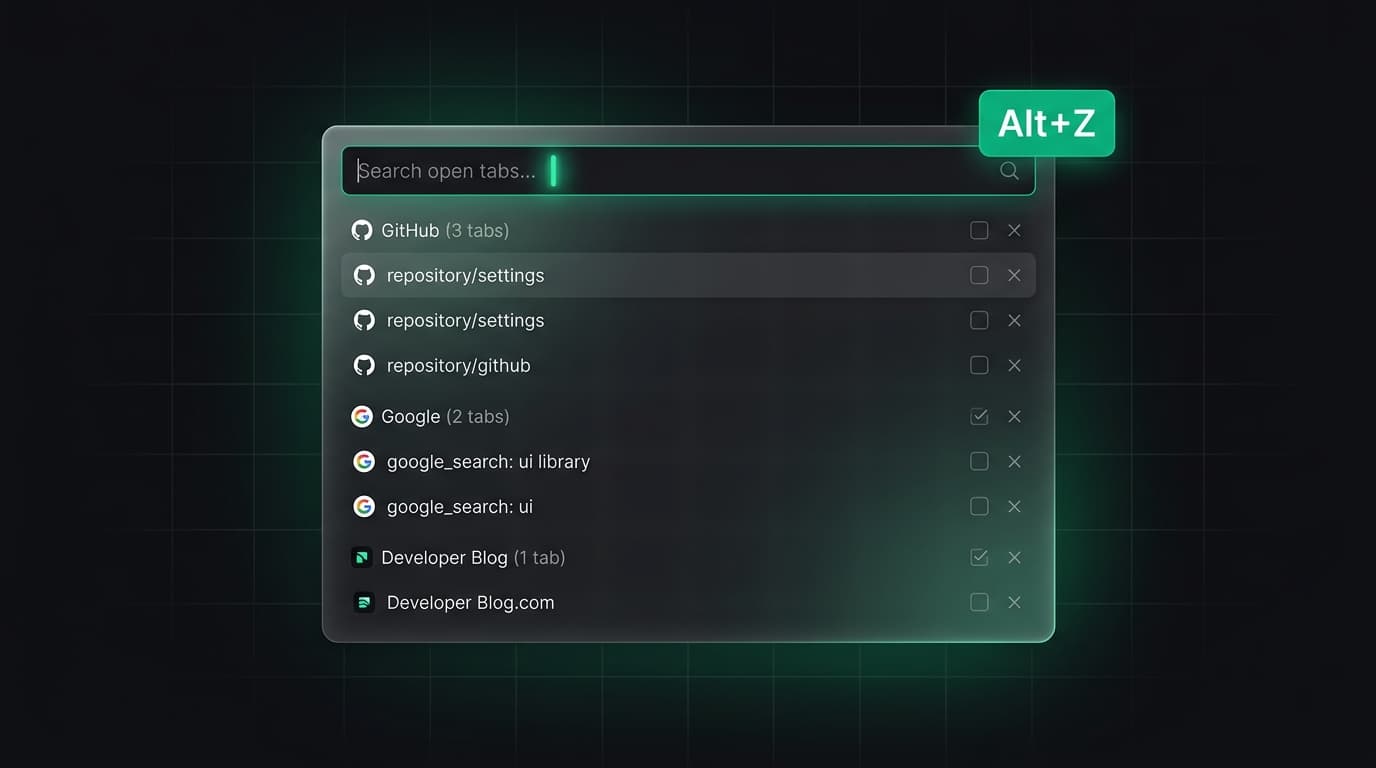
A practical flow is: show a 'Find tabs by page title' action, explain that reading titles requires tab metadata access, request the grant, then call chrome.tabs.query({}). If the grant is declined, keep URL-independent features available and offer a clear retry path.
Handle missing and restricted data
Do not assume every Tab object has a usable id, URL or title. The API marks several fields optional, and some browser pages are restricted. Read the field only after checking it exists, and avoid saving internal or private URLs merely because a query returned a tab object.
Test with a normal HTTPS page, a new tab, an incognito window where the extension has separate access, and a revoked optional grant. Document what the feature can still do under each condition.
Idea: a permission explainer inside a tab manager
Build a small permissions panel that maps each feature to the exact browser data it uses. For example, 'Open saved links' can work without tab metadata, while 'Search all open tab titles' needs broader access. Show whether the grant is active and let people disable optional features.
This makes permission requests understandable at the moment they matter. For a product team, it also provides a concrete review checklist whenever a new tab feature is proposed.
Implementation checklist
Check the extension context, required data fields, manifest declarations, user gesture and denial path before shipping. Review Chrome's current permission documentation when updating the extension because availability and warning behavior can change.
Keep a small test matrix for no grant, temporary grant, persistent host grant and revoked grant. A successful call in one development profile does not prove the least-privilege flow works for a new user.
Tabzero: Browser Tab Manager & Notes
Save tab links, keep notes beside your sources, and return to what matters. Tabzero is in development preview; AI Notes remains planned.
Related guides
Chrome Scripting API: Read a Page Only When Needed
Use chrome.scripting.executeScript with activeTab or host access, understand injection limits, and build a reviewable page-capture flow.
Chrome Tab Messaging: Service Workers and Content Scripts
Use runtime.sendMessage and tabs.sendMessage for tab features, validate responses, and avoid assuming a content script is present.
Chrome Storage API for Tab Sessions: local, sync, and session
Choose the right chrome.storage area for tab notes, settings, and temporary state while respecting quotas and recovery limits.